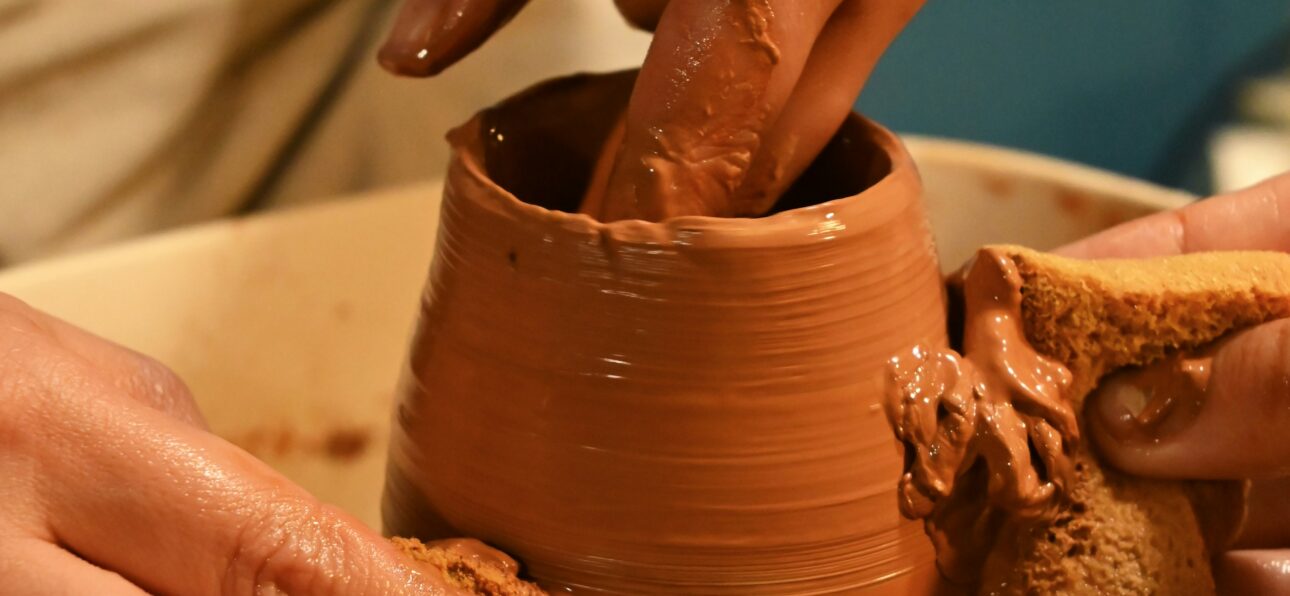
Pottery in Tunisia is not simply a craft. It is a language — spoken through the curve of a jar, the weight of a Zir, the texture of a hand-turned bowl. For thousands of years, Tunisian artisans have shaped the earth beneath their feet into objects of everyday beauty, and Maison Terracotta exists to carry that story forward.
Where It All Begins: The Clay
Every piece starts with raw Tunisian clay, carefully selected for its texture and mineral composition. Unlike industrial ceramics, handcrafted terracotta carries the natural warmth of the earth in both its color and its feel. The slightly rough, organic surface is not a flaw — it is a signature.
The Wheel, The Hands, The Fire
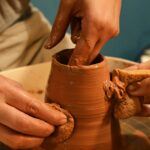
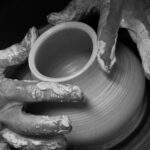
A skilled potter begins by centering the clay on a wheel, a process that demands years of practice to master. The hands guide the clay upward and outward, coaxing the shape from the material rather than forcing it. No two pieces are identical. A Jarre Nabeul will always carry the subtle marks of the hands that made it.
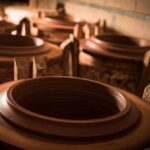
Once shaped, pieces dry slowly before entering the kiln. Terracotta is fired at temperatures that transform raw clay into a durable, porous material — ideal for keeping water cool, as the Zir has done for centuries across North Africa.
From the Workshop to Your Home
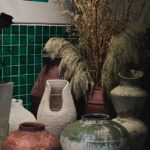
At Maison Terracotta, each piece travels from the craftsman’s hands directly to you. Whether it is a decorative vase for your living room, a garden planter for your terrace, or a traditional Keskes for your kitchen — every object carries the memory of the hands that made it.
That is not something a factory can replicate.